5 Signs That an Area Could Be the Next Real Estate Growth Zone
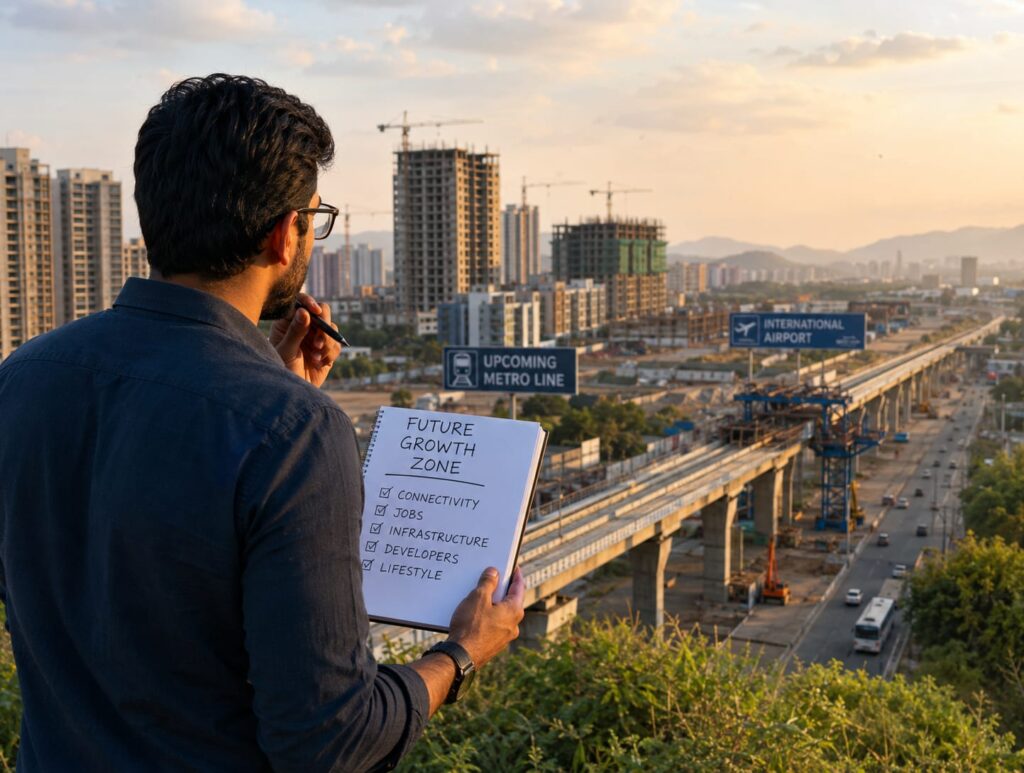
Let’s face it—nobody wants to buy a property only to watch the neighborhood stay exactly the same for the next ten years. We all want to find that hidden gem suburb where a modest investment today turns into a massive wealth generator tomorrow.
But how do you separate genuine, high-yielding future growth zones from dead-end areas that are all marketing hype and no substance?
The truth is, real estate hotspots leave a very distinct trail of breadcrumbs before they blow up. If you want to spot the next big boom before the rest of the crowd catches on, here is the unfiltered breakdown of what signs to look for, where the smart money goes, and how to validate the trend on the ground.
📌 WHAT are the clear signs of a future growth zone?
You don’t need a crystal ball to find a real estate goldmine. You just need to look past the empty plots and pay attention to these three undeniable catalysts:
The Government is Dropping Serious Cash: The moment you see heavy machinery, active road widening, or pillars being erected for a new metro line, highway extension, or flyover—pay attention. Better connectivity completely rewrites local geography. Areas that once felt “too far” suddenly become accessible, and property values always reset upward the moment the commute time drops.
Commercial Activity & Jobs are Moving In: Houses don’t create communities; jobs do. If an area is suddenly seeing construction blueprints for new IT parks, logistics hubs, data centers, or corporate offices, housing demand is guaranteed to follow. People hate long commutes, and they will always pay a premium to live within a 15-to-20-minute radius of their workplace.
Reputed Developers are Quietly Buying Land: Big-name, institutional developers don’t guess; they spend millions on data, research, and urban planning before entering a new micro-market. If you notice tier-1 builders aggressively acquiring large land parcels or launching soft phases of township projects in a raw area, it means their data has already confirmed the location’s long-term viability.
📍 WHERE do you see these signs playing out right now?
To see exactly how these signs materialize into actual wealth, you only have to look at the transition journeys of markets like Navi Mumbai.
A few years ago, Pushpak Nagar was just a quiet expanse of land under planning. But the moment the *Navi Mumbai International Airport* moved from a paper blueprint to heavy ground execution, and major developers began locking in projects, land values began to climb steadily. Today, it’s one of the most aggressive capital appreciation zones in the region.
We saw the exact same pattern in Ulwe and Taloja. Before the Atal Setu (MTHL) and the Navi Mumbai Metro Line 1 went live, these areas were treated as distant outskirts. The land prices didn’t spike overnight; they grew consistently year-after-year as the infrastructure got closer to completion. The early buyers who bought during the “ugly construction phase” captured the maximum upside, while the late-comers are now paying premium market rates for the exact same locations.
🛠️ HOW do you safely validate a growth zone before buying?
Identifying a potential growth zone is a great first step, but you still need to protect your capital from speculative bubbles. Here is how you verify the opportunity like a seasoned investor:
1. Follow the Money, Not the Gossip
Don’t buy a piece of property just because a local broker gives you a vague promise that “a bullet train or a mega mall is coming here soon.”Go online and check official government portals, budget allocations, and authority updates (like CIDCO, MMRDA, or NAINA). Look for projects that have already cleared land acquisition hurdles and are actively under construction.
2. Track the Organic Price Movement
A healthy growth zone experiences steady, incremental appreciation in land values over time, rather than random, volatile spikes driven by pure speculation. If prices in a raw area double within six months without a single new road actually being paved, it’s a speculative bubble—stay away. Look for steady, sustainable demand.
3. Visit the Site on a Weekday Peak Hour
The best way to see if an area is truly gaining traction is to look at its pulse when the world is working. Visit the micro-market on a Tuesday evening. Are there people on the streets? Are local shops opening up? Is the access road jammed with commercial transit? If the area feels completely deserted and lacks basic civic infrastructure like proper water connectivity, the growth timeline might be much farther out than the developer is letting on.
🔑 The Bottom Line (TL;DR)
What: Future hotspots are defined by active government transit spending, corporate job creation, and heavy investments by tier-1 developers.
Where: Look at historical case studies like Ulwe, Taloja, and Pushpak Nagar—the biggest wealth was created when investors bought into the infrastructure timeline early.
How: Verify construction progress via official government channels, avoid speculative price bubbles, and physically audit the neighborhood during peak hours before signing the check.